
How to Make the Customer the Hero
1. Start Here
Customers do not enter your story to admire your business. They arrive with a goal, question, problem, or hope of their own. Marketing becomes more useful when your content shows that you understand where they are trying to go.
In 15 focused minutes, you can reframe one completed experience so the customer's goal, decision, and progress lead the story while your business appears as the capable guide.
Your biggest opportunity: Help future customers recognize themselves as the person who can take the next step and reach a useful result.
Start with one completed experience: the customer's goal, what made progress difficult, how you helped, what the customer did, and what changed.
2. Observe & Capture
Observe
Look for an experience where a customer or participant:
- Came to you with a clear goal or responsibility.
- Felt uncertain, overwhelmed, or unsure what to do next.
- Made a meaningful choice after receiving useful guidance.
- Reached a result they helped make possible.
Choose an experience where the customer took action. The business may provide expertise, options, tools, or encouragement, but the customer should remain the person moving the story forward.
Capture
Preserve the details from the customer's point of view:
- What were they trying to accomplish?
- Why did that goal matter to them?
- What question or obstacle made progress harder?
- What did you help them understand or do?
- What choice or action did they take?
- What changed because they moved forward?
- What exact quote, photo, or fact makes their progress real?
- Do you have permission to share their name, image, and words?
Useful questions include:
- What were you hoping to accomplish?
- What felt difficult or uncertain at the beginning?
- What helped you decide what to do next?
- What are you able to do now that you could not do before?
- What would you tell someone facing a similar situation?
Capture preserves their goal, words, decisions, and progress. Recognition will shape those details into a story that keeps the customer at the center.
3. See an Example
This composite hardware-store example shows the difference between making the business the hero and making the customer the hero.
Business-Centered Version
Our knowledgeable team provides excellent service and helps customers find the right products for every home project. We showed Maya the best hinge and hardware for her gate repair.
The business sounds capable, but Maya's goal, uncertainty, action, and result are almost invisible.
Customer-Centered Version
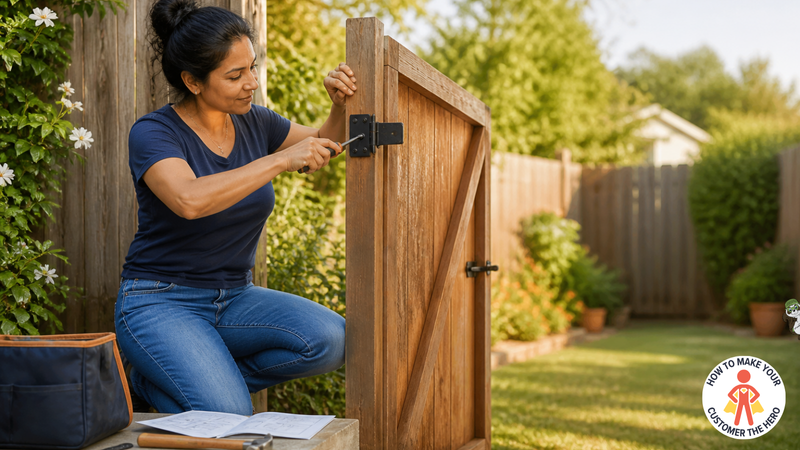
The goal: Maya wanted to repair a sagging backyard gate before her family visited for the weekend.
The uncertainty: She had never replaced a hinge and did not know which size would support the gate.
The guidance: A store employee asked about the gate material, looked at the photo Maya brought, and explained two practical options.
The customer's actions: Maya chose the heavier hinge, followed the installation tips, and completed the repair that afternoon.
The result: The gate opened smoothly, latched securely, and was ready before her guests arrived.
Customer quote: “I walked in expecting this to be complicated. A few good questions helped me fix it the same day.”
How the Finished Story Looks
Suggested title: How Maya Fixed a Sagging Gate Before Her Weekend Guests Arrived
The story: Maya wanted to repair a sagging backyard gate before her family arrived for the weekend, but she had never replaced a hinge and was unsure which size would support it. She brought a photo and a few measurements to the hardware store. An employee asked about the gate material and explained two practical options. Maya chose the heavier hinge, followed the installation tips, and completed the repair that afternoon. The gate opened smoothly, latched securely, and was ready before her guests arrived.
Why it matters: Instead of simply claiming the store has helpful employees, the story shows a customer with limited repair experience making a confident choice and completing an important project.
The reader’s next step: Bring a photo and a few measurements from your project. We will help you compare practical options so you can choose your next step.
The same pattern works in many settings:
- Community Organization: Show how a first-time participant chose the right program and took part with confidence.
- Professional services: Show how a client moved from a confusing decision to a clear, productive next step.
- Restaurant or Hospitality: Show how a guest planned an important experience and made choices that fit the occasion.
The business still matters, but as the guide who helped the customer move toward their goal.
4. Recognize & Amplify
Recognize
Turn the captured details into a short customer-centered story:
- Begin with the customer's goal.
- Name the obstacle or uncertainty they faced.
- Show the useful guidance your business provided.
- Describe the choice or action the customer took.
- Make the customer's progress or result visible.
- Invite someone in a similar situation to take one practical next step.
Check the balance before publishing. If most sentences begin with “we,” “our,” or the business name, revise the story. Your expertise should be visible through the help you provided, not through repeated claims about how good you are.
Publish the complete story on your website first. Use a title that leads with the customer's recognizable goal, situation, or result.
Title examples:
- How [Customer] [Reached a Useful Result]
- What Helped [Customer] Move from [Uncertainty] to [Progress]
Suggested meta description: See how [customer or group] overcame [uncertainty], took [useful action], and reached [result] with practical guidance from [business or organization].
Amplify
Help the published story travel:
- Share the website link when someone has a similar goal or question.
- Feature the customer's result in email and social media, then link to the complete story.
- Thank and tag the customer only when they have agreed to be identified.
- Share it with referral partners who help people facing similar situations.
- Use Local Connections when the experience has broader community value.
The customer remains the hero everywhere the story appears. Your business earns trust by being the guide who helped them move forward.
5. Get Going

Choose one completed customer or participant experience from the past 30 days.
Spend 15 minutes capturing the person's goal, uncertainty, decision, action, and result. Then review your draft and circle every use of “we,” “our,” or your business name. Keep only the references needed to explain how you helped.
Use the Customer-as-Hero Story Planner to complete one useful OCRA cycle. Publish the story on your website, share it in one relevant place, and then notice the next customer whose progress deserves to be visible.
Customer-as-Hero Story Planner →

📣 Use Locable's Business Blogging tools to publish the complete example on your website, share it through email and social media, and keep it available when future customers have a similar question.
👉 Request a Demo and we will show you how Locable can help you publish useful customer examples and distribute them wherever the right people are looking.